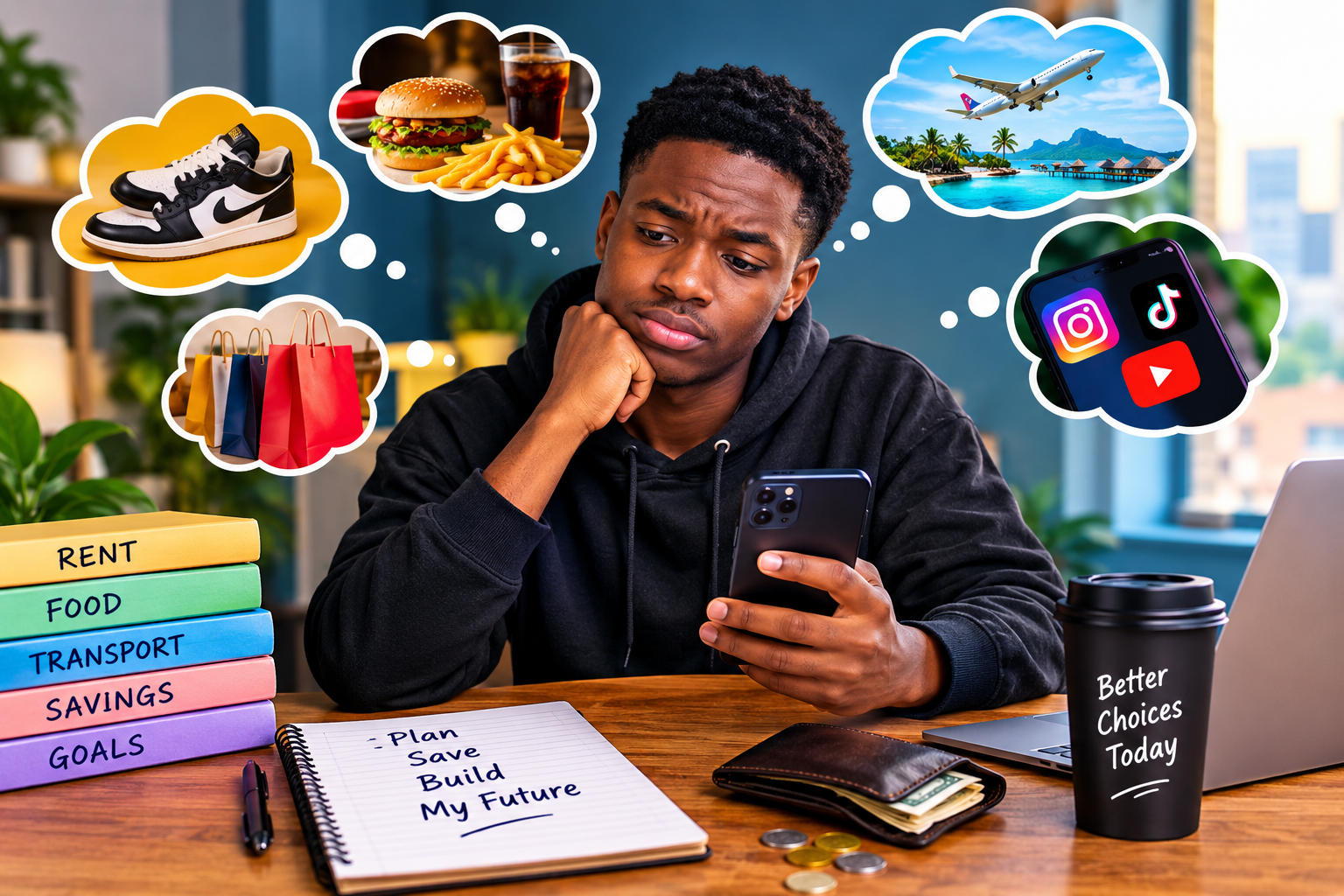
Why Do We Spend Money We Don't Have?
It is payday. Your phone buzzes with a salary notification, and for a moment, everything feels possible.
You order food instead of cooking. You upgrade your data bundle. You buy the shoes you have been watching online. Maybe you send money to a friend, pay for a few subscriptions and make a couple of purchases you had been postponing.
A few days later, you check your balance and wonder: Where did all the money go?
For many young people, the problem isn't simply that they don't earn enough. Sometimes, it is the way our minds respond to money.
Money can make us feel richer than we are
When money enters our account, our brains can treat it as an opportunity to spend rather than something that needs to be managed.
This is why payday can feel different from the rest of the month. Expenses that seemed unnecessary yesterday suddenly appear affordable today.
The danger is that your bank balance can give you a false sense of financial security.
Having KSh 20,000 in your account doesn't mean you have KSh 20,000 available to spend.
Some of that money already has a job.
Rent, transport, food, bills, savings and emergencies may all be waiting for it.
We often spend to feel good
Money isn't only about mathematics. It is also connected to emotions.
You may buy something because you're stressed. You may order expensive food because you had a difficult day. You may shop because you feel left behind when you see what other people are posting online.
The purchase provides a quick feeling of satisfaction.
But that feeling doesn't always last.
The bill does.
This is one reason emotional spending can become a cycle: feel bad ? spend money ? feel good temporarily ? regret the spending ? feel bad again.
Breaking that cycle requires recognizing the emotion before reaching for your wallet.
The pressure to keep up
Social media has made comparison easier than ever.
You see someone travelling, wearing new clothes, driving a better car or eating at an expensive restaurant. What you don't see is their full financial situation.
They could be earning more. They could have saved for the trip. They could be using credit. Or they could simply be spending money they don't actually have.
Trying to match someone else's lifestyle can quietly destroy your own financial plans.
Your financial life should be built around your income, your responsibilities and your goals—not somebody else's Instagram feed.
The small-spending problem
Most people don't become broke because of one huge purchase.
Sometimes it is the collection of small decisions.
KSh 200 here.
KSh 300 there.
Another delivery fee.
Another subscription.
Another impulse purchase.
Each expense seems harmless on its own.
But repeated often enough, small expenses become a significant part of your monthly spending.
That doesn't mean you should never enjoy your money. The goal is to become conscious of where it goes.
Give your money a job
One simple way to fight impulsive spending is to decide what your money is supposed to do before you spend it.
When you receive income, divide it according to your priorities.
For example:
- Essential expenses
- Savings
- Debt payments
- Investments
- Personal spending
- Emergency fund
The exact percentages will depend on your situation.
The important part is that spending should happen after you've considered your priorities—not before.
The pause that can save your money
Before making an unplanned purchase, ask yourself three questions:
Do I need this?
Can I comfortably afford it?
Would I still buy it tomorrow?
That final question is powerful.
If you can wait 24 hours and still genuinely want the item, you can make the decision with a clearer mind.
Sometimes the desire disappears.
And when it does, you've just saved money without feeling like you sacrificed anything.
The real lesson
Spending money you don't have isn't always about being irresponsible.
It can be about emotions, social pressure, instant gratification and the way our brains respond to having money available.
Understanding those psychological triggers is the first step toward changing your financial habits.
Because becoming financially healthier isn't simply about earning more money.
Sometimes, it starts with understanding why you spend the money you already have.
FTLuma — Financial knowledge for better money decisions.


💬 Discussion (0)
No comments yet. Be the first to share your thoughts!
Leave a Response