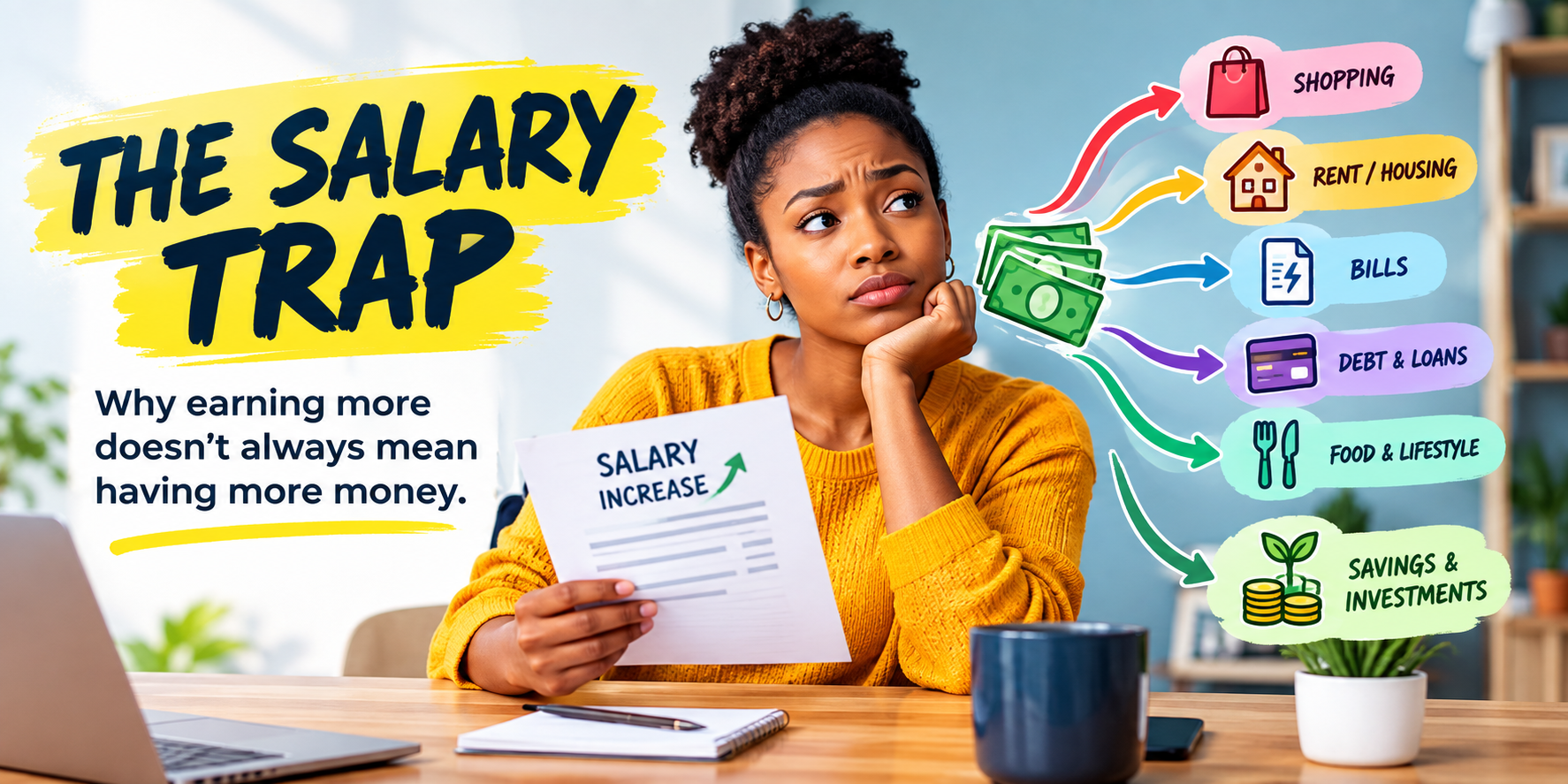
You finally get the salary increase you have been waiting for.
Your income goes up. You feel relieved. Maybe you even tell yourself that life will finally become easier.
Then, somehow, a few months later, you are asking the same question:
“Where did all my money go?”
Your salary is higher, but your savings haven't grown.
Your lifestyle has improved. Your phone is newer. You eat out more often. You may have taken on a bigger loan, upgraded your internet package or moved into a more expensive house.
Yet at the end of the month, there is still very little left.
Welcome to the salary trap.
It is one of the most common problems in personal finance: earning more money without actually becoming financially stronger.
When More Money Creates More Spending
Getting a higher income is supposed to improve your financial situation.
But human behaviour can make things more complicated.
When people earn more, they often increase their spending.
A person who once cooked at home every day may start ordering food several times a week. Someone who used public transport may decide they can now afford frequent ride-hailing. A modest apartment may suddenly feel too small.
None of these decisions is necessarily wrong.
The problem begins when every increase in income is immediately matched by an increase in expenses.
This is known as lifestyle inflation.
Instead of using additional income to strengthen your financial position, you use it to create a more expensive lifestyle.
The result?
You earn more but remain financially stressed.
The Problem With “I Deserve It”
After working hard, it is natural to want to enjoy your money.
You deserve to treat yourself.
But there is a difference between rewarding yourself occasionally and turning every increase in income into another permanent expense.
A salary increase can easily become a new subscription, a larger loan, expensive clothes, frequent entertainment or a more expensive car.
The danger is that many of these expenses become normal.
What felt like a luxury six months ago can eventually feel like a necessity.
Then the next salary increase arrives—and the cycle starts again.
Your Salary Can Grow While Your Wealth Stays the Same
Income and wealth are not the same thing.
Your salary tells you how much money comes in.
Your financial position depends on what happens to that money afterward.
Imagine two people earning the same amount.
The first person spends almost everything every month.
The second person controls expenses, builds an emergency fund, reduces expensive debt and regularly saves or invests.
After several years, their financial situations could look completely different—even though they earned the same salary.
That is why financial progress is not simply about earning more.
It is also about keeping more and putting it to work wisely.
What Should You Do When Your Income Increases?
A pay rise can become one of the most powerful moments for improving your finances—if you plan for it before the money arrives.
Instead of allowing your entire lifestyle to expand, give your additional income a job.
For example, you could divide a salary increase between several priorities:
Save more. Increase your emergency fund or savings contribution.
Pay down debt. Use part of the additional income to reduce expensive loans or credit balances.
Invest. Put some money toward long-term financial goals.
Enjoy some of it. You do not have to deny yourself everything. A controlled increase in lifestyle spending can still be part of a healthy financial plan.
The key is balance.
Five Signs You May Be Stuck in the Salary Trap
1. Your salary has increased, but your savings haven't.
If your income keeps growing but your bank balance does not, your expenses may be growing just as quickly.
2. You depend on your next paycheck.
A higher salary should ideally give you more breathing room. If you still run out of money before payday, something needs to change.
3. Your debts keep increasing.
Higher income can make lenders willing to offer you larger loans. But being able to borrow more does not mean you can afford more debt.
4. Your “needs” keep getting more expensive.
If yesterday's luxuries have become today's necessities, lifestyle inflation may be quietly eating your income.
5. You don't know where your money goes.
If you cannot explain where most of your monthly income disappears, tracking your spending should be your first financial priority.
Don't Let Your Lifestyle Consume Your Future
There is nothing wrong with wanting a better life.
The purpose of earning more money is not to live like you are still earning your old salary forever.
But every salary increase presents a choice.
You can allow your expenses to rise automatically—or you can use some of that additional income to buy something more valuable than another purchase:
financial freedom.
That could mean having six months of expenses saved.
It could mean becoming debt-free.
It could mean having investments that grow over time.
Or simply reaching the point where an unexpected expense no longer causes panic.
The next time your income increases, don't immediately ask:
“What can I afford now?”
Ask a better question:
“What can this extra money do for my future?”
Because earning more money is only half the journey.
The real financial win is making sure more of it stays with you.
#PersonalFinance #MoneyManagement #FinancialLiteracy #SavingMoney #Budgeting #MoneyTips #FinancialFreedom #FTLuma


💬 Discussion (0)
No comments yet. Be the first to share your thoughts!
Leave a Response