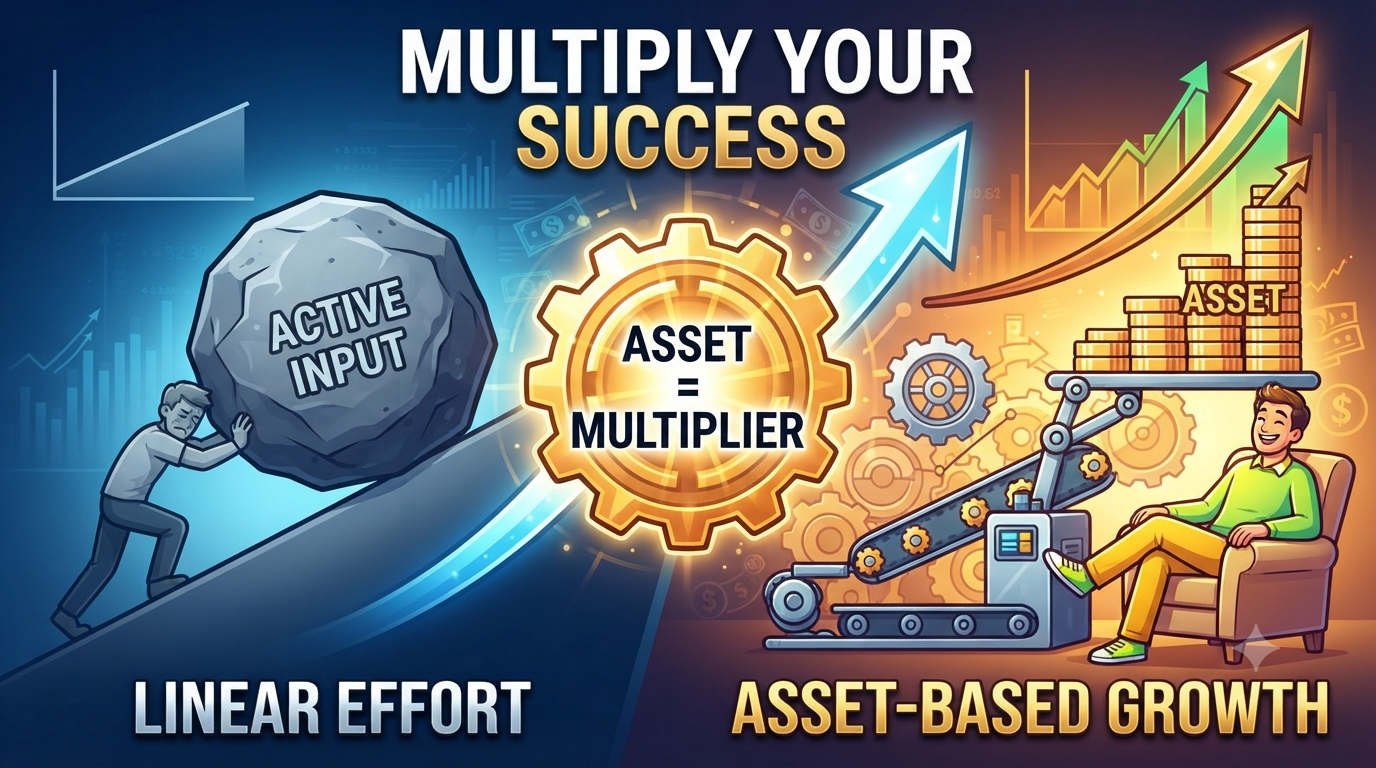
If you’ve been following along with the "Rule of Multiplication," you already know that small, consistent habits can lead to incredible growth over time. It is a powerful concept: doing a little bit every day, compounded over months or years, leads to results that far exceed the sum of the individual parts. But here is the secret that separates those who see good results from those who see explosive, life-changing success: the missing link of assets.
Think of your life as a journey. If your habits are the engine that keeps your vehicle moving forward, assets are the specialized fuel and upgrades that allow you to cover more ground with less effort. They don’t just add to your progress; they act as a multiplier that transforms linear effort into exponential output.
What Exactly is an "Asset" in This Context?
In traditional finance, we think of assets as bank accounts, real estate, or stocks. While those are definitely assets, when we are talking about the Rule of Multiplication, the definition becomes much broader and more exciting. In our framework, an asset is anything that gives you a return on your time, money, or energy without requiring you to "rent" your body and mind to it every single day. It is about shifting your perspective from "I have to trade my time for money" to "I have built something that works for me even when I am resting."
Essentially, an asset is a lever. It is a mechanism that allows you to move heavy objects (your goals) with significantly less force than would otherwise be required. When you create an asset, you capture the value of your labor and bottle it so it can be consumed or used repeatedly.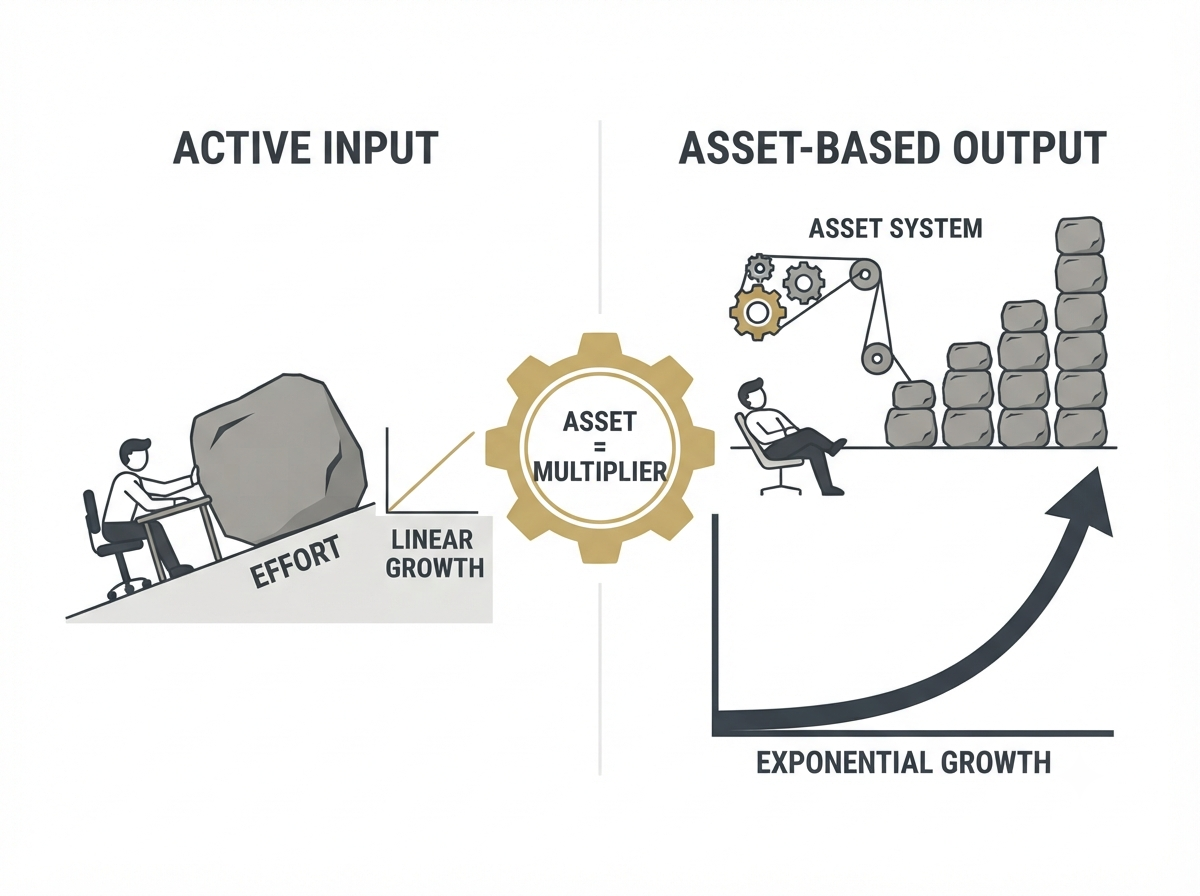
The Four Pillars of Multiplier Assets
To truly harness the power of multiplication, you should focus on four specific categories of assets that possess "high leverage":
- Knowledge Assets: These are systems, frameworks, and documented expertise. If you spend time solving a complex problem once, documenting the process, and turning it into a repeatable framework, you never have to solve it from scratch again. You’ve just multiplied your future efficiency.
- Creative Assets: This includes content, digital products, software, and intellectual property. The beauty of these is their marginal cost of replication: it takes the same amount of effort to sell a digital file to one person or to one million people. Once created, they work for you 24/7.
- Network Assets: Your reputation and your professional connections are massive assets. A strong network acts as a multiplier because it grants you access to opportunities, insights, and talent that would be impossible to secure through individual effort alone. Your network effectively extends your reach.
- Financial Assets: These are the classics. Whether it is a dividend-paying stock or an interest-bearing account, these assets harness the raw mathematical power of compound interest: A = P(1 + r/n)^nt. By letting your capital do the heavy lifting, you allow your money to multiply while you sleep.
How to Start Building Your Asset Base
If you feel like you are constantly on a treadmill, working hard but not seeing the exponential growth you want, your first goal is simple: start converting your transient efforts into permanent assets. It is the transition from being a "worker" to being a "builder."
Start by identifying the recurring tasks in your life. What do you find yourself doing over and over again? That is your biggest opportunity for asset creation. Once identified, systematize it by writing it down, creating a template, or building a tool. Finally, automate or delegate that process so that it can operate independently of your direct intervention. By doing this, you free up your capacity to build the next asset.
The Rule of Multiplication isn’t just about working harder; it’s about working smarter by building a foundation that pays dividends long after the initial effort is spent. Keep building those assets, and you will see your trajectory shift from a slow climb to a steep ascent.




💬 Discussion (0)
No comments yet. Be the first to share your thoughts!
Leave a Response